
Keywords
- Malnutrition
- Afflict
- Besieged
- Privation
- Sinister
Listening
Text
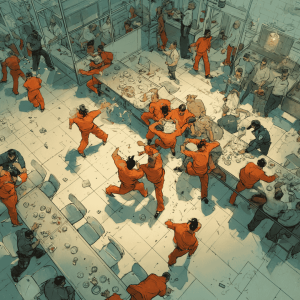
In the year 2137, the outer sectors of City Nine were besieged by constant drone patrols. Escape was nearly impossible, and those who tried were met with sinister consequences—broadcasts of their public punishment looped on the communal screens for days.
Lena crouched behind a rusted air duct, clutching a tattered ration card. Her brother, Kye, lay unconscious beside her, weakened by malnutrition and a hacking cough that no longer startled anyone. Illness had come to afflict nearly every family in their quadrant, spreading like digital code through a corrupt system—inevitable and unseen.
Since the last solar shortage, food deliveries had stopped. Fuel reserves were drained. Medical kits had vanished. What remained was privation in its purest form—no light, no warmth, no relief. People traded batteries for bread, data for drugs. And those who protested were never seen again.
Whispers told of a resistance forming in the north zones—untouched by the radiation storms and shielded from surveillance. Lena didn’t know if it was real, but she had to try. She ripped down the government placard warning against curfew violations, hiding it under Kye’s blanket. If hope was forbidden, then rebellion was the only remedy.
Match the definition
Gap-fill
Complete the story
Discussion questions
- In what ways can control of resources be used as a form of oppression in dystopian societies?
- How does malnutrition affect not just the body, but also a person’s ability to think and act?
- What would drive someone to resist in a world like the one described in the story?
- Do you think a society can survive long-term under constant surveillance and threat? Why or why not?
- What parallels do you see between this fictional world and events or places in the real world?
Post-listening activity
Discussion Questions
Answer the questions
- How do economic pressures in your country compare to those in the U.S.?
- What are the pros and cons of the gig economy for young professionals?
- Should student loans work differently? If so, how?
- Do you think the government should play a role in helping young people afford housing and education?
- What financial advice would you give to someone starting their career today?
Debate
Divide the class into two teams:
Group A: older generations (Boomers/Gen X),
Group B: younger generations (Millennials/Gen Z).
Debate the following: “Young people today have it harder than past generations.”
You have 5 – 10 minutes to prepare your arguments with your group.
Financial Advisor
Students work in pairs or groups to create a realistic monthly budget for a 25-year-old living in a major U.S. city or a city in their country.
*They must account for rent, food, transportation, debt, savings, and other expenses.
Objective: Use vocabulary related to money, justify choices, and compare priorities.
When students are finished, present their budget plan to the class, and vote on who had the best financial plan.