
Objectives
By the end of this lesson:
-
Students will be able to identify and define high-level vocabulary related to workplace dynamics, emotions, and personal growth.
- Students will be able to apply target vocabulary correctly in context to describe professional relationships and conflict resolution.
Vocabulary 1
Keywords 1
Word | IPA (American) | Pronunciation |
|---|---|---|
Reconciliation | /ˌrɛkənˌsɪliˈeɪʃən/ | REH-kun-sil-ee-ay-shun |
Podium | /ˈpoʊdiəm/ | POH-dee-um |
Inseparable | /ɪnˈsɛpərəbəl/ | in-SEP-ruh-bull |
Ambitious | /æmˈbɪʃəs/ | am-BISH-us |
Meaningful | /ˈminɪŋfəl/ | MEE-ning-full |
Promotion | /prəˈmoʊʃən/ | pruh-MOH-shun |
Tension | /ˈtɛnʃən/ | TEN-shun |
Interpret | /ɪnˈtɜrprət/ | in-TUR-prit |
Decisive | /dɪˈsaɪsɪv/ | dih-SY-siv |
Accomplishment | /əˈkɑmplɪʃmənt/ | uh-KOM-plish-ment |
Words in context (Touch/Click)
After years of silence, the two sisters finally achieved reconciliation.
The mayor stepped up to the podium to begin the press conference.
The two puppies were inseparable and slept in the same basket every night.
As an ambitious student, he studied every night to ensure he got into medical school.
She wanted a career that felt meaningful, so she became a nurse.
After five years of hard work, he finally received a promotion to senior manager.
You could feel the tension in the room before the winner was announced.
It is difficult to interpret the law without legal training.
A firefighter must be decisive in an emergency to save lives.
Winning the championship was the team’s greatest accomplishment.
Match the definition
Match the synonym
Gap-fill
Listening
Listening for gist
Listening comprehension
Gap-fill
Full text
The Grace of Reconciliation
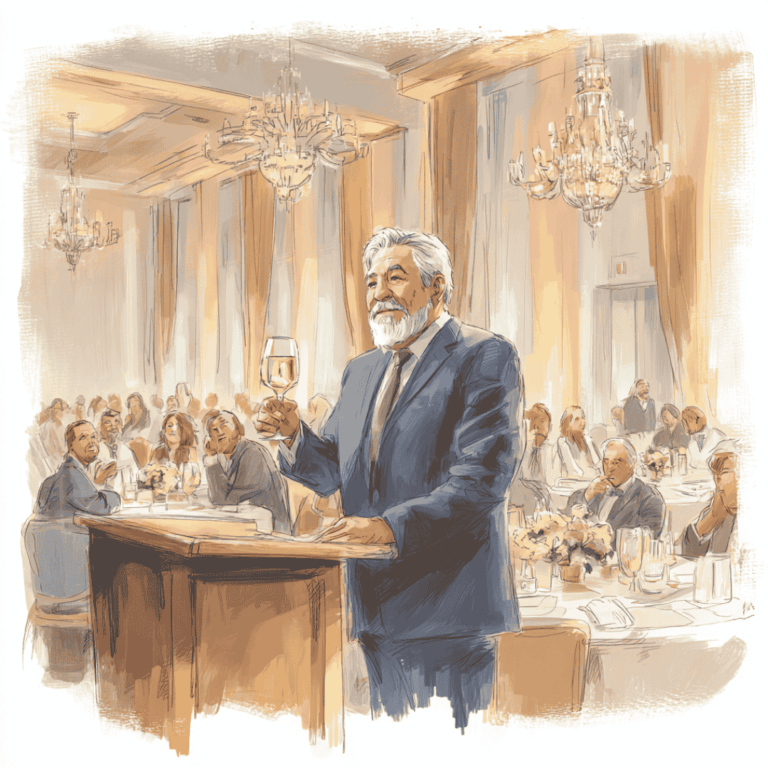
The conference hall smelled faintly of coffee and polished wood. Round tables were arranged in neat rows, each decorated with small white flowers. At the front of the room stood a podium with a microphone. A large screen displayed a slideshow of photos from the past twenty-five years.
I stood near the back wall, holding a folded piece of paper in my hand. I had written my speech three times already. Each version sounded either too formal or too honest.
Tonight was Daniel’s retirement ceremony.
When we had first started working together, we had been inseparable. We were both young analysts, ambitious and full of ideas. If I had stayed late at the office, Daniel had stayed later. If he had proposed a project, I had supported it completely. We had believed that success would come easily if we worked hard enough.
For years, it felt like we were building something meaningful together.
However, things changed after Daniel received a promotion that I had quietly hoped for myself. I had congratulated him warmly, but inside, I had felt something shift. Although I admired his talent, I also began to question my own value.
Over time, our conversations became shorter. He seemed more confident, more decisive. I became careful with my opinions. Once, after I had presented an idea at a meeting, Daniel had suggested that it “needed more development.” His tone had been professional, but I had interpreted it as doubt.
Looking back now, I realize that we had both grown more guarded. Neither of us had addressed the tension directly. Instead, we had focused on our individual accomplishments.
A few years later, I transferred to another department. We exchanged polite emails on birthdays and holidays, but the friendship we had once shared quietly disappeared.
Now, as I watched him laughing with former colleagues across the room, I felt unexpectedly emotional. Daniel looked older, of course, but he also looked peaceful. People were lining up to congratulate him. He had clearly made an impact.
The host tapped the microphone and announced that it was time for speeches.
When my name was called, I walked to the podium, aware that dozens of eyes were watching me. I unfolded my paper.
“Daniel and I started here at the same time,” I began. “We learned everything together. We challenged each other. We supported each other.”
My voice sounded steady, even though my thoughts were racing.
“I have always admired Daniel’s determination,” I continued. “He pushed himself — and all of us — to improve. Because of him, I became more disciplined and more resilient.”
There was a murmur of agreement from the audience.
I paused.
“What I never said before,” I added carefully, “is that growth is not always comfortable. Sometimes, it forces us to face our insecurities. Working with Daniel taught me not only about success, but about humility.”
Daniel met my eyes. For a brief moment, neither of us looked away.
After the applause, I returned to my seat, feeling lighter than I had expected.
We had not solved everything. We had not revisited the past in detail.
But for the first time in years, I felt something close to reconciliation.
Sometimes, closure does not come from long conversations.
Sometimes, it comes from finally saying what should have been said all along.
Vocabulary 2
Keywords 2
Word | IPA (American) | Pronunciation |
|---|---|---|
Faintly | /ˈfeɪntli/ | FAYNT-lee |
Guarded | /ˈgɑrdəd/ | GAR-did |
Address | /əˈdrɛs/ | uh-DRESS |
Determination | /dɪˌtɜrməˈneɪʃən/ | dih-tur-min-AY-shun |
Disciplined | /ˈdɪsəplɪnd/ | DISS-uh-plind |
Resilient | /rɪˈzɪljənt/ | rih-ZIL-yunt |
Murmur | /ˈmɜrmər/ | MUR-mur |
Insecurity | /ˌɪnsɪˈkjʊrəti/ | in-si-CURE-uh-tee |
Steady | /ˈstɛdi/ | STED-ee |
Closure | /ˈkloʊʒər/ | KLOH-zhur |
Words in context
I could hear the music faintly from the neighbor’s house.
She became guarded when the interviewer asked about her childhood.
We need to address the budget issues before we spend any more money.
With great determination, he learned to walk again after the accident.
You must be very disciplined to wake up at 4 AM every day to train.
The local economy is resilient and has recovered quickly from the crisis.
A low murmur spread through the crowd when the news broke.
His constant bragging is actually a sign of deep insecurity.
You need a steady hand to paint such small details.
- Writing a final letter gave him the closure he needed to move on.
Match the definition
Synonyms
Gap-fill
Vocabulary 3
Adjust the story
Test Yourself!
Want More Stories?