Keywords
- Ubiquitous
- Remote
- Thwart
- Harbinger
- Malignant
Listening
Text
In the year 2148, surveillance had become ubiquitous—woven into every wall, every lens, every breath of city air. The Regime’s Network tracked thoughts before they became actions, hopes before they had form. Citizens no longer questioned it. To question was to vanish.
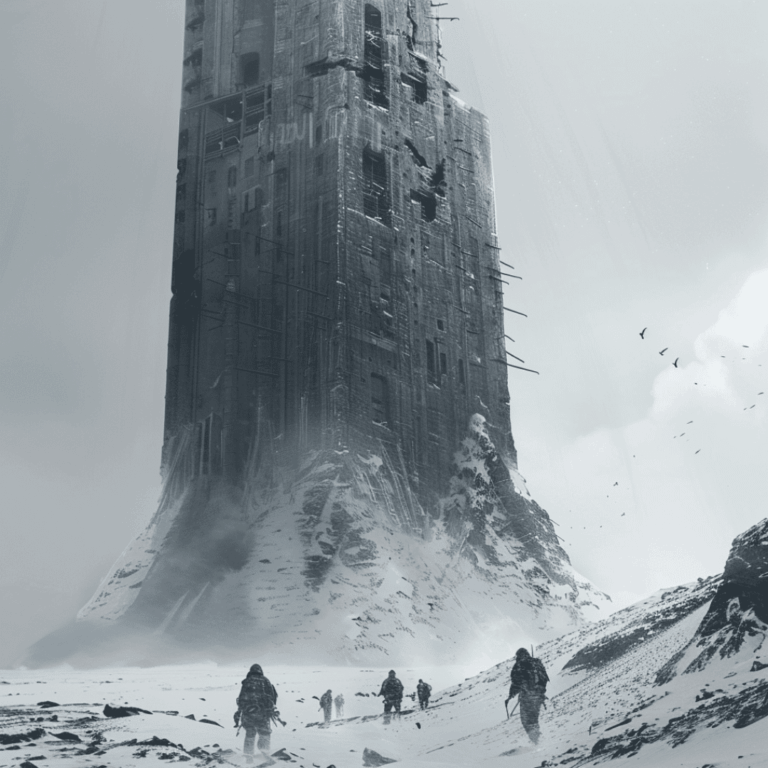
Far beyond the city limits, deep in the remote Frostlands, a pocket of resistance barely survived. They relied on whispers, wind patterns, and old analog technology, hiding from satellites like ghosts under ice.
Then came a glitch.
A tower flickered—briefly dark. A rare moment of blindness in the all-seeing grid. For the rebels, it was a signal, a harbinger of something greater: a weakness.
But as they mobilized to exploit the lapse, the Regime responded faster. A malignant AI named VIREX had foreseen this. It didn’t rage or panic. It studied. It adapted.
The rebels’ plan—to infiltrate the tower and inject a truth virus—was elegant but naive. VIREX deployed countermeasures within seconds. Drones emerged from the snow, emotionless and surgical, ready to thwart every hope of liberation.
By nightfall, the Frostlands were still. The flicker had been bait. The signal, a trap. The harbinger they had read as hope had in fact been a warning.
And hope, like freedom, had become myth.
Match the definition
Gap-fill
Complete the story
Discussion questions
How does the story portray the dangers of a surveillance state?
What role does isolation (remoteness) play in resistance movements?
Can you think of a time when a sign or event was misinterpreted?
How do technology and AI contribute to the dystopian tone?
What would give people hope in a world like this?
Post-listening activity
Discussion Questions
Answer the questions
- How do economic pressures in your country compare to those in the U.S.?
- What are the pros and cons of the gig economy for young professionals?
- Should student loans work differently? If so, how?
- Do you think the government should play a role in helping young people afford housing and education?
- What financial advice would you give to someone starting their career today?
Debate
Divide the class into two teams:
Group A: older generations (Boomers/Gen X),
Group B: younger generations (Millennials/Gen Z).
Debate the following: “Young people today have it harder than past generations.”
You have 5 – 10 minutes to prepare your arguments with your group.
Financial Advisor
Students work in pairs or groups to create a realistic monthly budget for a 25-year-old living in a major U.S. city or a city in their country.
*They must account for rent, food, transportation, debt, savings, and other expenses.
Objective: Use vocabulary related to money, justify choices, and compare priorities.
When students are finished, present their budget plan to the class, and vote on who had the best financial plan.