Skip to content

A Voice in the Dark
Your difference can be your gift.
Pip the frog has always longed to sing like the birds, but no matter how hard he tries, all he can produce is a loud, rough croak. Then, late one dark night, Pip discovers that the very voice he was ashamed of might be exactly what’s needed.
You’re going to hear a story about a frog named Pip, who wishes he could sing like the birds around his pond. Before you listen, three words to know:
Listen to the whole story once. Then tap the Questions button on the player and choose the best answer — you’ll see right away if it’s correct.
Pip was a small green frog who lived beside a quiet pond. Every morning, before the sun had fully risen, the birds in the trees began to sing. Their songs were soft and beautiful, and Pip would sit on his lily pad for hours, just listening. More than anything, he wanted to sing like them.
One day, he decided to try. He opened his mouth, took a breath, and waited for something lovely to come out. “Tweet?” he attempted. But the sound that escaped was not lovely at all. “Croak! Croak!” It was deep and rough, and it echoed across the water.
Pip was crushed. “I’ll never sing properly,” he said quietly. “All I can do is croak.”
A bluebird who had been resting nearby tilted her head. “But your croak is so loud,” she said kindly. “That’s a wonderful thing!” Pip didn’t believe her, and he almost gave upgive up · to stop trying to do something. trying to enjoy the mornings at all.
For days, the same disappointment returned. Then, one evening, everything changed. The light was fadingfade · to slowly become weaker, softer, or less bright., and the pond had grown dark and still. The other birds had already tucked themselves into the trees, and the first stars were beginning to appear.
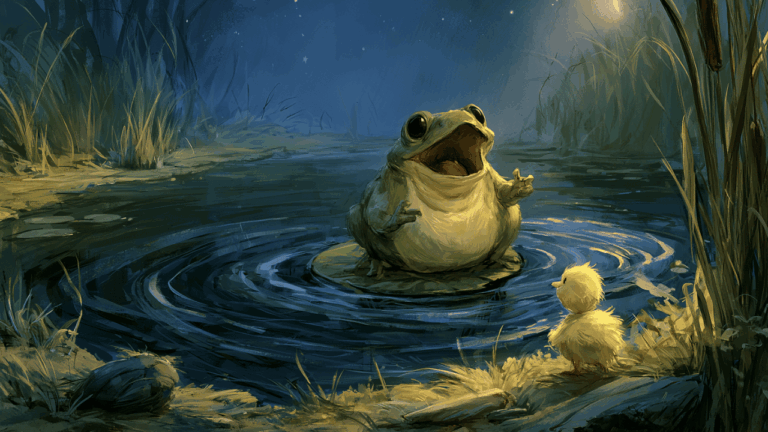
While Pip sat alone, he suddenly heard a small, frightened sound — someone was crying. In the long grass near the water, a tiny duckling sat shivering. “I’ve lost my mother,” she whispered, “and it’s too dark to find the way home. I can’t see anything.”
Pip thought hard. The duckling’s mother was somewhere out in the night, and although she couldn’t see her baby in the darkness, perhaps — he realizedrealize · to suddenly understand or become aware of something. — she could still hear.
Pip took a deep breathtake a deep breath · to breathe in slowly and fully, often before something hard., filled his chest with air, and let out the loudest croak he had ever made. “CROAK! CROAK! CROAK!” The sound rolled across the pond and into the trees, filling the silent night.
Far away, the mother duck lifted her head. She followed the deep, steady croaking through the dark until, at last, she reached the grass by the water. “My baby!” she cried, and the little duckling rushed into her wings.
Before they left, the duckling turned to Pip with shining eyes. “Thank you,” she said. “Your croak isn’t just loud — it’s the most beautiful song I’ve ever heard. It brought my mother back to me.”
For the first time, Pip felt truly proud. The birds had their sweet, gentle songs, and that was fine. But his voice was different. It was loud and strong, and tonight it had been exactly what someone needed. He didn’t have to sound like everyone else; the very thing that made him stand outstand out · to be clearly different from others, in a way people notice. had made all the difference.
The next morning, when the birds began their song, Pip climbed onto his lily pad, opened his mouth, and joined in. “CROAK! CROAK!” His song wasn’t soft, and it wasn’t sweet — but it was loud, it was strong, and it was entirely his own. And that, he finally understood, was something to be proud of.
Listen again and read along with the transcript. Then tap the Questions button on the player and answer each one.
Pip was a small green frog who lived beside a quiet pond. Every morning, before the sun had fully risen, the birds in the trees began to sing. Their songs were soft and beautiful, and Pip would sit on his lily pad for hours, just listening. More than anything, he wanted to sing like them.
One day, he decided to try. He opened his mouth, took a breath, and waited for something lovely to come out. “Tweet?” he attempted. But the sound that escaped was not lovely at all. “Croak! Croak!” It was deep and rough, and it echoed across the water.
Pip was crushed. “I’ll never sing properly,” he said quietly. “All I can do is croak.”
A bluebird who had been resting nearby tilted her head. “But your croak is so loud,” she said kindly. “That’s a wonderful thing!” Pip didn’t believe her, and he almost gave upgive up · to stop trying to do something. trying to enjoy the mornings at all.
For days, the same disappointment returned. Then, one evening, everything changed. The light was fadingfade · to slowly become weaker, softer, or less bright., and the pond had grown dark and still. The other birds had already tucked themselves into the trees, and the first stars were beginning to appear.
While Pip sat alone, he suddenly heard a small, frightened sound — someone was crying. In the long grass near the water, a tiny duckling sat shivering. “I’ve lost my mother,” she whispered, “and it’s too dark to find the way home. I can’t see anything.”
Pip thought hard. The duckling’s mother was somewhere out in the night, and although she couldn’t see her baby in the darkness, perhaps — he realizedrealize · to suddenly understand or become aware of something. — she could still hear.
Pip took a deep breathtake a deep breath · to breathe in slowly and fully, often before something hard., filled his chest with air, and let out the loudest croak he had ever made. “CROAK! CROAK! CROAK!” The sound rolled across the pond and into the trees, filling the silent night.
Far away, the mother duck lifted her head. She followed the deep, steady croaking through the dark until, at last, she reached the grass by the water. “My baby!” she cried, and the little duckling rushed into her wings.
Before they left, the duckling turned to Pip with shining eyes. “Thank you,” she said. “Your croak isn’t just loud — it’s the most beautiful song I’ve ever heard. It brought my mother back to me.”
For the first time, Pip felt truly proud. The birds had their sweet, gentle songs, and that was fine. But his voice was different. It was loud and strong, and tonight it had been exactly what someone needed. He didn’t have to sound like everyone else; the very thing that made him stand outstand out · to be clearly different from others, in a way people notice. had made all the difference.
The next morning, when the birds began their song, Pip climbed onto his lily pad, opened his mouth, and joined in. “CROAK! CROAK!” His song wasn’t soft, and it wasn’t sweet — but it was loud, it was strong, and it was entirely his own. And that, he finally understood, was something to be proud of.
Now look at five key words from the story. Look at each picture, read the line where the word appears, and say the word out loud.
| Picture | Word | Line from the story | Meaning |
|---|---|---|---|
| give up (phrasal verb) | “he almost gave up trying” | To stop trying to do something. | |
| fade (verb) | “The light was fading.” | To slowly become weaker, softer, or less bright. | |
| realize (verb) | “perhaps — he realized — she could still hear” | To suddenly understand or become aware of something. | |
| take a deep breath (phrase) | “Pip took a deep breath.” | To breathe in slowly and fully, often before something hard. | |
| stand out (phrasal verb) | “the very thing that made him stand out” | To be clearly different from others, in a way people notice. |
Type the right word or phrase in each gap. Use the word bank to help — you may need to change the form of the word.
Fill the gap from memory — no word bank this time. Type the word.
You listened, noticed the words, and used them yourself. Come back any time to listen again — repetition is how the words stick.